I grew up with homemade rolls at every holiday dinner. Fluffy, warm and flavorful without being too rich.

I’ve tweaked my recipe and technique throughout the years, and have finally settled on my go-to recipe. This one is a traditional dinner roll recipe, but with a twist: I add a Tangzhong, a flour and water gel. This allows for a springy, creamy moist and tender interior without too much heaviness or richness. The rolls have a beautiful texture, fluffy but still with substance. Ideal for soaking up gravy, or for slathering with extra butter. I love these rolls for making mini sandwiches the day after Thanksgiving or Christmas dinner. This same dough is wonderful for hamburger buns. Just shape into a slightly flattened round prior to the second rise, and space the balls at least three inches apart on a baking sheet. AND — if you want to have the best cinnamon rolls, use this dough to make your homemade Cinnamon Rolls.
Enjoy!
Fluffy Yeast Rolls SMALL BATCH
makes 12 – 15 dinner rolls
Ingredients:
for the tangzhong: 1/3 cup + 1 TB cool water with 2 TB flour
3/4 cup milk, lukewarm
1/4 cup sugar
1 tsp sea salt, fine
1 large egg
1 packet Instant dry yeast*
1/4 cup unsalted butter – softened
12 – 15 ounces white flour (approximately 2 1/2 to 3 cups) (All purpose or bread flour will both work well, though the total amount of flour may be less if using bread flour)
1/4 cup salted clarified*** butter
1 egg and 1 TB milk for the egg wash
Fluffy Yeast Rolls LARGE BATCH
makes 36 – 45 dinner rolls
Ingredients:
for the tangzhong: 1 1/4 cups (10 oz) cool water with 6 1/2 TB (2 oz) flour
2 cups milk, lukewarm
3/4 cup sugar
1 TB sea salt, fine
3 eggs
3/4 cups unsalted butter, softened
35 – 45 oz white flour (approximately 7 1/2 to 9 cups) (All purpose or bread flour will both work well, though the total amount of flour may be less if using bread flour)
3 packets Instant dry yeast*
3/4 cup salted clarified*** butter
2 eggs with 2 TB milk for the egg wash
Equipment:
9 X 13 baking pan(s)
instant read thermometer (Thermapen is my favorite)
glass measuring cup
Mixing bowls
kitchen scale (Oxo 11-LB pull out scale is my favorite)
Make the tangzhong (amounts specified above): Mix cold water with flour in a 1 cup Pyrex glass measuring cup. Blend thoroughly to remove any lumps. Heat on high in a microwave for 30 seconds. Stir. Heat again for 30 seconds. Stir. Heat again for 15 seconds and stir. You should notice that the mixture will gel and become thick but still liquid. Carefully continue to heat in short bursts until the mixture boils. Set aside. If you’d prefer, you can easily make the tangzhong in a small saucepan on the stove. Heat on medium until the mixture comes to a boil, stirring constantly.
In a mixing bowl blend together the milk, sugar, salt, tangzhong and unsalted butter. Check the temperature: it should be warm but not hot (under 110 or so). Add the egg and mix. Now check temperature again — should be about 105. It is safe to add the yeast at this temperature. Add the yeast, and blend. Add one cup of flour and mix on low with the paddle for 2 – 3 minutes to create a smooth batter consistency. Add another scoop of flour and mix again until that scoop of flour is incorporated.
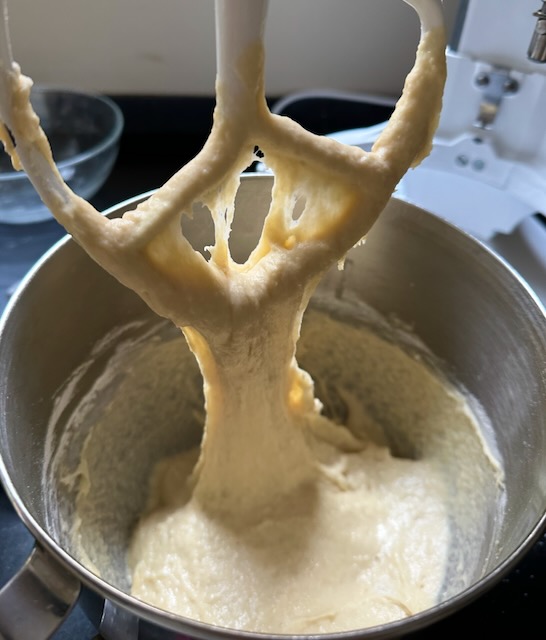
Switch to your bread hook for the final additions of flour, or move the dough to the kneading board if preferred. Add another small scoop of flour and mix on low until the dough begins to climb the hook but does not clear the bottom of the mixing bowl. Your goal is a soft almost sticky dough. Just before the dough looks stiff enough, turn it out onto a lightly floured counter or cutting board for light hand kneading. You will end up with a soft, almost sticky dough that holds a soft mound.
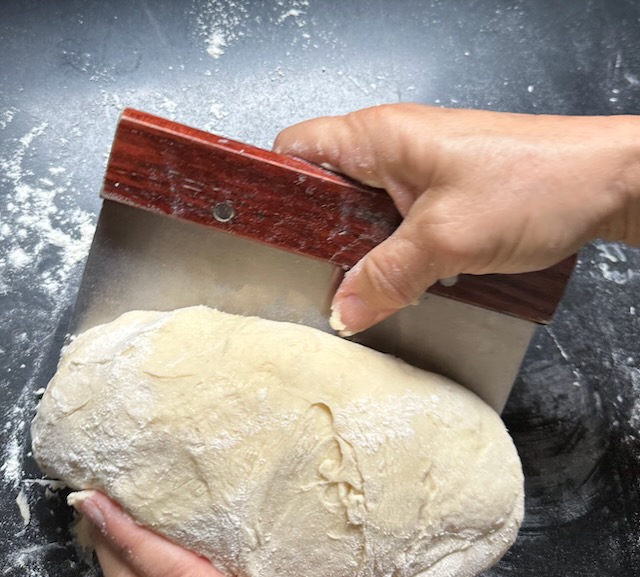
Place the dough into a clean and very lightly oiled bowl. Cover with a moistened cotton tea towel to prevent drafts and set in a warm place to prove. I use the Proof setting on my oven. An environment from 77 to 95 degrees f is ideal.
Allow the dough to rise until doubled in size. How long with this take? Much depends on the temperature of where the dough was placed for the rise, and on the vigor of the yeast. Use fresh dry yeast for this recipe — look at the expiration date on the package. I think that a slower prove yields tastier rolls, so don’t worry if they seems to take too long to rise the first time. It’s all about fresh yeast and the temperature of the proofing area.

When the dough has risen to double its original volume, it’s time to shape the rolls. Your choice here! This is an ideal dough for cinnamon rolls, any shaped and flavored pastry, cloverleaf rolls, or hamburger buns. Here, I’ll focus on a pan of dinner rolls. To make a simple pan of dinner rolls, use 9 X 13 baking pan(s). You will need to shape 12 or 15 rolls per pan, your choice. I recommend using your kitchen scale to measure the dough as you divide it to shape the rolls to keep the roll size identical. Really, though, you can use whatever pans you have available.
For nicely rounded tops, you’ll need to take a blob of dough, then create the round shape by smoothing the tops while pinching the dough together at the bottom of the ball. Hard to describe, but simple once you get the hang of it. The goal is to stretch the top of the dough to create a ball shape that gives the rolls their characteristic round top with sides touching. You can also roll each dough ball on a smooth counter top or marble pastry block to create the smooth shape. But don’t worry too much about the perfect shape. This is a delicious, forgiving dough.
Prepare the baking pan by pouring in the 1/4 cup of melted clarified salted butter. Place the dough balls evenly throughout the pan.

Set in a warm place for the second rise. The second rise will be faster than the first. When the rolls are nicely puffed looking but no bigger than double the size of the dough ball, it’s time for baking.
Preheat oven to 375, Convection mode if possible. For a shiny browned top, you may gently brush the tops of your risen roll dough balls with an **egg wash just prior to baking, though this is a optional step.
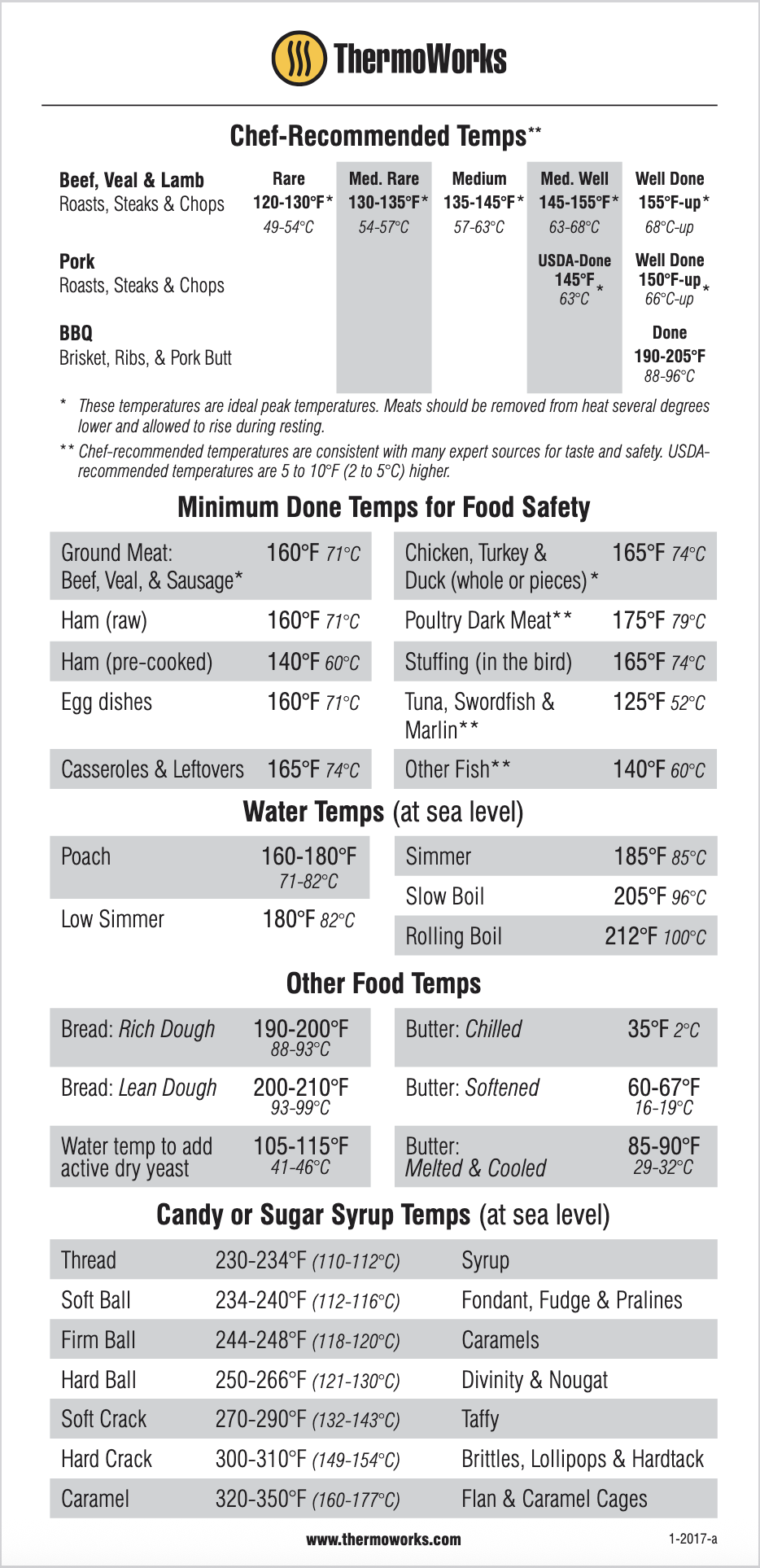
Bake the rolls for about 20 minutes or until golden brown on top and 200 degrees in the center. (see chart below for more info on temperatures and foods)
Allow to cool until warm, then enjoy.
Make ahead tips:
1. Make and bake the rolls. Cool completely, then wrap air tight and freeze. A couple hours before serving remove the rolls from the freezer to thaw and come to cool room temp. Just before serving heat the rolls to warm in a 300 degree oven.
2. If you’d like to make the dough balls days or even weeks ahead of time, you may stop at the shaped roll stage, but prior to the second rise. You can then refrigerate the pan of unbaked roll balls for up to a day, or freeze them for up to two weeks. You will need to warm the pan with the unrisen rolls at room temp and then allow them to rise prior to baking, so account for this added time.
*Instant dry yeast does not need to be mixed with warm water prior to use in your dough. If you are using typical Active dry yeast, mix the yeast with 1 – 2 TB 105 degree water and 1/2 tsp sugar and let sit for 5 minutes prior to inclusion in your dough, and decrease the milk by 1 TB. If using fresh yeast be sure to check the expiration date – this is a perishable yeast and must be fresh for it to rise properly. Here’s more info on yeast.
**egg wash: one beaten egg mixed with 1 TB milk.
***I prefer clarified butter because it offers a less soggy roll bottom. To clarify butter, gently heat on the stove to a low simmer, allowing bubbles to form. Stirring often, allow the butter to cook for several minutes, and the moisture will evaporate while the milk solids rise to the top. After the butter looks like there’s fewer bubbles forming, remove it from the heat and set aside. If you cook your butter with a bit more heat you will have browned butter, which is just as tasty to use to coat the pan prior to adding the roll dough balls.
Thermapen temperature chart:

 recipemuse.com
14 oz for bread. 8 oz is a cup. I just need to no how much flour in cups. I’m old. Haha
Hi there — so sorry for the late reply! I just saw this. For flour, there are about 5 oz by weight in one cup. I always measure my flour with a scale, as it is much more accurate.